


 SP
SP
Christmas before Christmas : -10% extra discount with the code NOEL10
- Marker F10 Tour Ski Bindings L305-365 90mm Black Whitewas €328.00 Special Price €213.20

- LOOK ST 10 DEMO D92 BLACK Ski Bindings for Menwas €400.00 Special Price €332.00

- Head Almonte 10 Pt Br.90 Men's Ski Bindingswas €430.00 Special Price €395.60

- Head Almonte 10 Pt Br.105 Men's Ski Bindingswas €430.00 Special Price €395.60
- Head Almonte 10 Pt Demo Br.105 Men's Ski Bindingswas €550.00 Special Price €506.00
-
 Any questions ?
A real ski store
answers your questions - Look Ridge 12 d88 black gold ski bindingswas €549.00 Special Price €505.08
- Look Ridge 12 d98 black gold ski bindingswas €549.00 Special Price €505.08
- Look Ridge 12 d110 black gold ski bindingswas €549.00 Special Price €505.08
- Look 7 summits 10 d88 black silver ski bindingswas €369.00 Special Price €339.48
- Look 7 summits 10 d98 black silver ski bindingswas €369.00 Special Price €339.48
- Look 7 summits 10 ski bindings w/o brk blk silvwas €299.00 Special Price €275.08
- Look Ht Radical 10 D82 Rtl Black Ski Bindingswas €445.00 Special Price €409.40
- Look Ht Radical 10 D92 Rtl Black Ski Bindingswas €445.00 Special Price €409.40
- Look Ht Radical 10 D100 Rtl Black Ski Bindingswas €445.00 Special Price €409.40
- Look Darklite 12 Back ski bindingswas €425.00 Special Price €391.00
- Look St 10 Black Touring Ski Bindingswas €270.00 Special Price €248.40
- Look Ht Radical 10 D82 Black Touring Ski Bindingswas €435.00 Special Price €400.20
- Look Ht Radical 10 D92 Black Touring Ski Bindingswas €435.00 Special Price €400.20
-
- Look Ht Radical 10 D100 Black Touring Ski Bindingswas €435.00 Special Price €400.20
- Look Hm Rotation 10 Demo D90 Touring Ski Bindingswas €460.00 Special Price €423.20
- Look Hm Rotation 10 Demo D105 Touring Ski Bindingswas €460.00 Special Price €423.20
- Look Hm Rotation 10 Demo D120 Touring Ski Bindingswas €460.00 Special Price €423.20
- Look HM ROTATION 12 D105 Ski Bindingswas €450.00 Special Price €414.00
- Look HM ROTATION 12 D120 Ski Bindingswas €450.00 Special Price €414.00


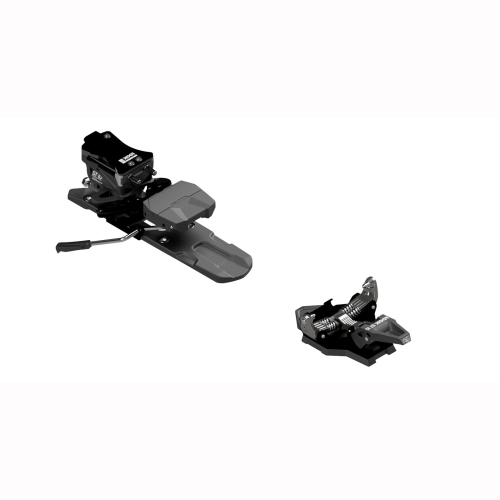


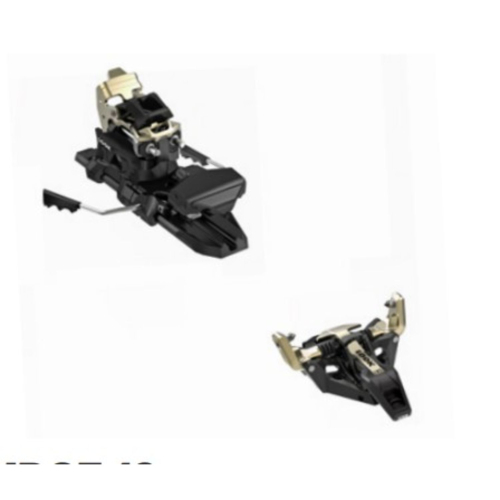

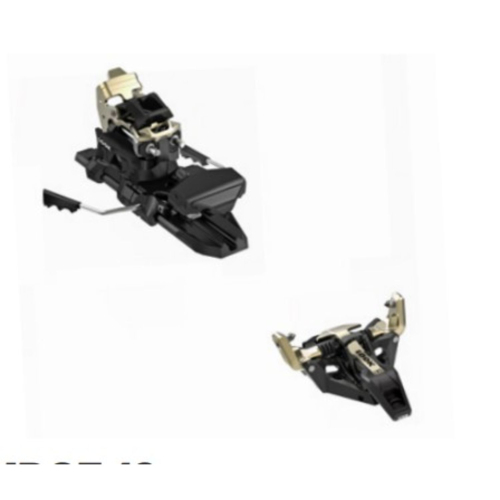

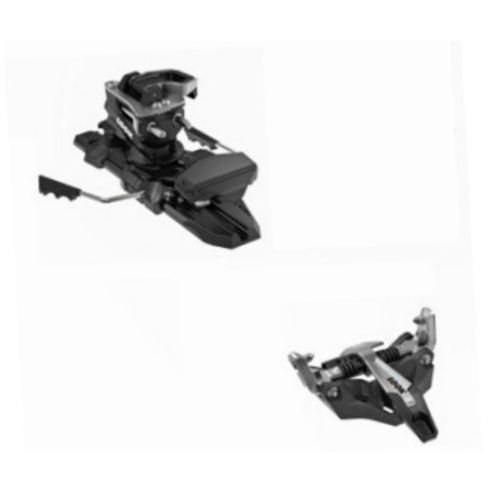






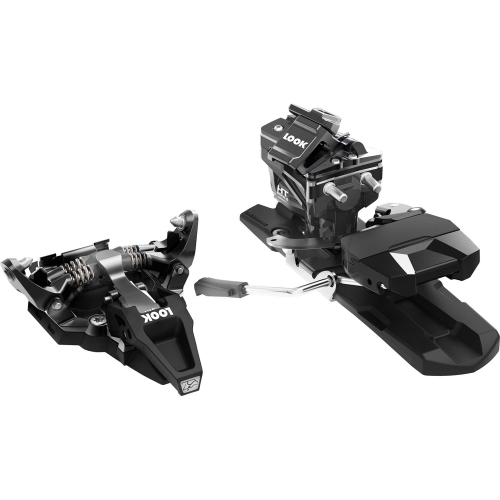






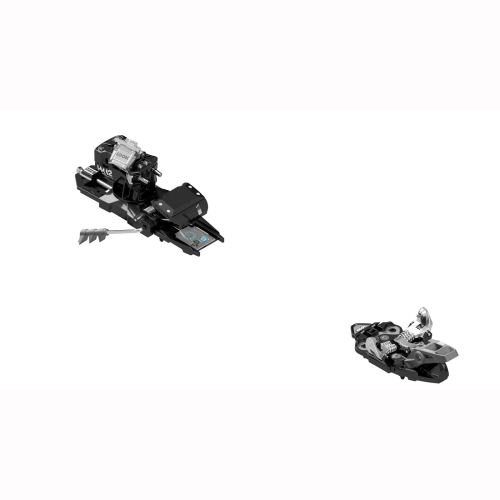
Choosing the right ski touring bindings
The different types of ski touring bindings
Essential to connect the boot to the ski while ensuring smooth transitions during ascent and descent, ski touring bindings come in several categories. Understanding their differences is crucial to making the right choice. The main types of bindings are low tech insert models, hybrid bindings, and frame bindings.
Low tech bindings: lightness and efficiency
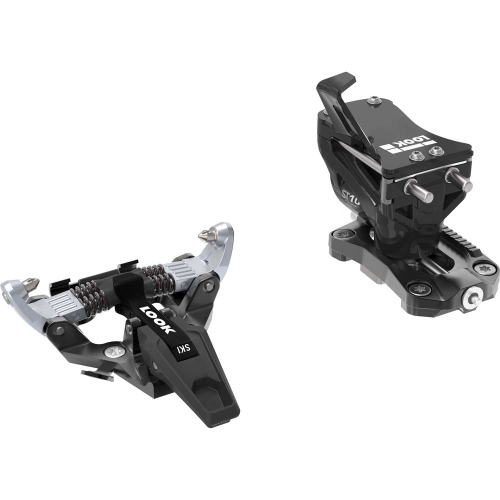
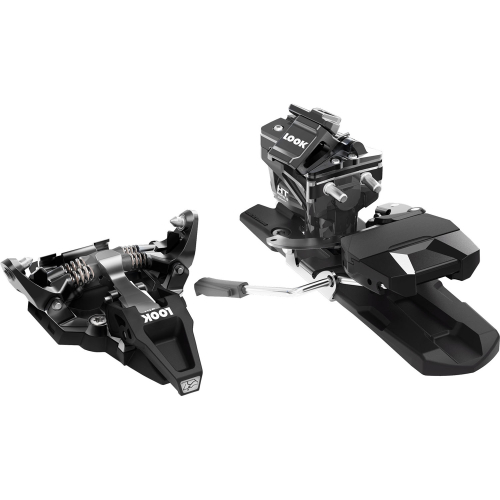
Low tech bindings are the lightest on the market. Their design relies on two metal inserts at the front of the boot and a heel piece at the back. Weighing between 300 g and 900 g per pair, they are ideal for performance-oriented practitioners or lightweight touring. Their simple mechanism allows significant weight savings, although the release safety is somewhat limited.
- Ideal for long outings and ski mountaineering
- Compatible only with specific insert boots
- Mechanical release sometimes absent on the lightest models
Recent models, such as those offered by Marker and Look, now integrate DIN-adjustable stops and reinforced safety systems without significantly increasing weight.
Frame bindings: maximum safety
Inspired by alpine skiing, frame bindings stand out for their robustness and release capabilities. The toe piece and heel piece are connected by a sliding metal frame, allowing simple adjustment to boot length. This is the preferred choice for those who prioritize descent and safety over weight.
- Generally weigh over 1,600 g per pair
- Lateral and forward release equivalent to alpine ski bindings
- Very good compatibility with alpine ski boots
Brands like Head and Look offer high-performance frame bindings for freerando enthusiasts who seek comfort on the descent.
Hybrid bindings: the perfect compromise
Between lightness and safety, hybrid bindings represent a balanced solution. Their design combines a low tech toe piece with an alpine-style heel piece. This allows better release management while reducing overall weight. They generally weigh between 1,000 g and 1,700 g per pair.
These bindings suit practitioners looking for good uphill efficiency while maintaining maximum safety on the descent. Some models from Marker or Head integrate ski brakes, multiple climbing aids, and full DIN adjustment.
How to choose your ski touring bindings?
The choice of touring bindings depends primarily on your practice. Budget is of course an important criterion, but analyzing your needs both uphill and downhill remains a priority.
For competition and lightness
Competitors will favor ultra-light bindings without ski brakes or DIN adjustment. These models, often under 300 g, focus entirely on efficiency. They notably include bindings with a leash replacing the brake, and a fixed heel piece with minimal climbing aid.
- Featherweight for big elevation gains
- Ideal for competitions and ski mountaineering
- Limited safety, reserved for experienced skiers
For classic touring
For more versatile practice, low tech bindings with heel release offer a good compromise. Adding ski brakes allows safer use, especially on technical or icy terrain. Some models provide adjustable climbing aids according to slope.
- Good weight / safety balance
- Versatility for regular use
- Compatible with most insert boots
For freerando and safety
Frame or hybrid bindings are recommended for skiers who prioritize descent and want reliable bindings in case of a fall. Customizable DIN release allows adaptation according to your weight, height, and skill level. These bindings are a wise choice for versatile use without compromising safety.
- Optimal release safety
- Good compatibility with touring or alpine boots
- Higher weight but acceptable over short distances
The DIN setting: a criterion not to be overlooked
The DIN refers to the binding release value. It is adjusted based on your weight, height, age, and skill level. A good DIN setting helps reduce injury risks while preventing unwanted releases.
Modern bindings from Marker or Look often offer dual DIN adjustment, at the toe and heel, for enhanced safety both uphill and downhill.
Not all ski touring bindings include a safety adjustment.
Summary of ski touring binding families
- Competition bindings: less than 300 g, ultra-light, without complete safety mechanism.
- Classic low tech bindings: 300 g to 900 g, with partial release system, perfect for regular touring.
- Hybrid bindings: between 1,000 g and 1,700 g, offering a safety / comfort compromise.
- Frame bindings: over 1,600 g, very safe, ideal for sustained descents.
Find a wide selection of equipment on our online store Snow Concept, specialist in ski, snowboard and accessories equipment. For personalized advice, contact us info line: 09.63.00.76.65 or via our contact form, our technical advisors will guide you in your ski purchase.